

Medical practices today face unprecedented challenges in delivering quality care while maintaining operational efficiency. Southside medical management represents a comprehensive approach to healthcare delivery that balances patient satisfaction, staff productivity, and financial sustainability. This model has emerged as a critical framework for practices seeking to thrive in an increasingly complex healthcare landscape. Understanding the principles and implementation strategies of effective medical management can transform a struggling practice into a high-performing healthcare organization.
Understanding the Southside Medical Management Model
The southside medical management approach encompasses multiple dimensions of practice operations. At its core, this methodology emphasizes systematic processes, data-driven decision making, and patient-centered care delivery.
Modern medical practices implementing this framework typically focus on three fundamental pillars: operational excellence, clinical quality, and financial health. Each pillar supports the others, creating a stable foundation for sustainable growth. Practices that excel in one area while neglecting others often experience instability and reduced performance over time.
Key Components of Effective Practice Management
Successful southside medical management requires integration across several critical areas. The following components work together to create a cohesive operational system:
- Patient scheduling and flow optimization
- Electronic health record (EHR) utilization
- Revenue cycle management
- Staff training and development programs
- Quality assurance protocols
- Patient communication systems
Organizations like Southside Medical Management demonstrate how comprehensive medical services can be delivered through coordinated management approaches. These systems reduce redundancies, improve patient outcomes, and enhance overall practice efficiency.
Operational Efficiency in Medical Practice Management
Operational efficiency serves as the backbone of successful southside medical management. Practices must streamline workflows to maximize provider productivity while maintaining high-quality patient interactions.
Workflow Analysis and Optimization
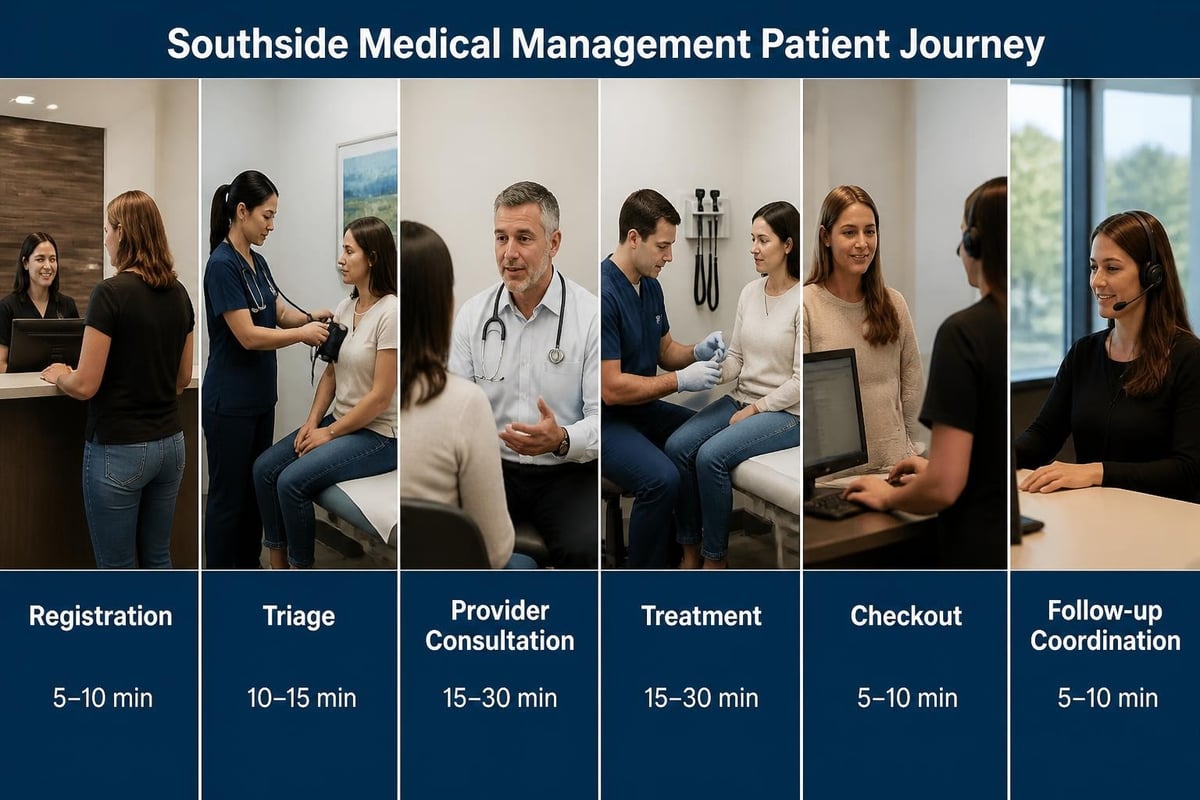
The first step toward operational excellence involves comprehensive workflow analysis. Practice managers should map every patient touchpoint from initial contact through final billing resolution. This mapping reveals bottlenecks, redundancies, and opportunities for improvement.
| Workflow Stage | Common Bottleneck | Solution Strategy |
|---|---|---|
| Patient Intake | Incomplete forms | Digital pre-registration |
| Check-in | Long wait times | Staggered scheduling |
| Clinical Exam | Room turnover | Standardized protocols |
| Checkout | Payment processing | Automated billing systems |
| Follow-up | Missed appointments | Automated reminders |
Implementing standardized protocols reduces variation in care delivery. When staff members follow consistent procedures, patients experience more predictable service, and the practice achieves better outcomes with fewer resources.
Technology Integration for Enhanced Performance
Technology plays a crucial role in modern southside medical management. Electronic health records, practice management software, and patient portals create an integrated ecosystem that supports efficient operations.
Practices should evaluate their technology stack quarterly to ensure optimal performance. Outdated systems create friction, frustrate staff members, and reduce patient satisfaction. Investment in current technology typically yields returns through improved productivity and reduced errors.
Consider implementing these technological solutions:
- Cloud-based EHR systems for accessibility and data security
- Automated appointment reminders via text and email
- Patient portals for secure communication and document sharing
- Telehealth platforms for remote consultations
- Analytics dashboards for real-time performance monitoring
Patient Engagement and Communication Strategies
Effective southside medical management prioritizes patient engagement as a core competency. Engaged patients demonstrate better adherence to treatment plans, experience improved health outcomes, and maintain longer relationships with their providers.
Building Strong Patient Relationships
Patient relationships begin before the first appointment and continue long after treatment concludes. Practices should develop comprehensive communication strategies that address each stage of the patient journey.
Pre-appointment communication sets expectations and reduces no-show rates. Send confirmation messages, provide directions, and explain what patients should bring to their appointments. This preparation reduces anxiety and improves first-visit experiences.
During appointments, providers should practice active listening and shared decision-making. Patients who feel heard and involved in their care demonstrate higher satisfaction scores and better treatment compliance. The patient resources and health organization links available through many practices help patients access reliable health information between visits.
Post-Visit Follow-Up Protocols
Post-visit engagement represents one of the most overlooked opportunities in southside medical management. Structured follow-up ensures continuity of care and demonstrates the practice's commitment to patient wellness.
Develop a tiered follow-up system based on patient needs:
- Routine visits: Automated satisfaction surveys within 24 hours
- New diagnoses: Provider phone call within 48 hours
- Chronic conditions: Scheduled check-ins every 30 days
- Post-procedure care: Nursing staff contact within one week
This systematic approach prevents patients from falling through the cracks while distributing workload appropriately among staff members.

Financial Management and Revenue Optimization
Financial sustainability enables practices to invest in quality improvement, staff development, and advanced technologies. Southside medical management requires sophisticated approaches to revenue cycle management and financial planning.
Revenue Cycle Management Best Practices
The revenue cycle begins when a patient schedules an appointment and ends when all balances are paid. Each step in this cycle presents opportunities for optimization or potential revenue loss.
Insurance verification should occur before every appointment. Staff members must confirm coverage, understand co-payment requirements, and identify any pre-authorization needs. This proactive approach prevents denied claims and reduces collection difficulties.
Coding accuracy directly impacts revenue capture. Practices should invest in ongoing training for billing staff and conduct regular audits to identify coding patterns that may indicate undercoding or overcoding. Both extremes harm the practice: undercoding leaves money on the table, while overcoding creates compliance risks.
| Revenue Cycle Metric | Industry Benchmark | Action Threshold |
|---|---|---|
| Days in A/R | 30-40 days | >45 days |
| First-pass claim rate | >95% | <90% |
| Collection rate | >95% | <92% |
| Patient payment collection | 70-80% | <65% |
Financial Planning and Budgeting
Strategic financial planning distinguishes thriving practices from those merely surviving. Practice managers should develop comprehensive annual budgets that account for seasonal variations, anticipated growth, and potential market changes.
Monthly financial reviews keep leadership informed about practice performance. These reviews should compare actual results against budget projections, identify variances, and trigger corrective actions when necessary. Quarterly strategic planning sessions allow leadership to adjust tactics based on year-to-date performance and emerging trends.
Staff Development and Team Performance
Human capital represents the most valuable asset in southside medical management. Well-trained, motivated staff members deliver superior patient experiences and drive practice success.
Recruitment and Onboarding Excellence
Hiring decisions significantly impact long-term practice performance. Develop detailed job descriptions that clearly articulate responsibilities, required competencies, and cultural expectations. This clarity attracts candidates who align with practice values and reduces turnover.
Structured onboarding programs accelerate new hire productivity. The first 90 days should include:
- Comprehensive orientation to practice systems and protocols
- Shadowing experienced team members across departments
- Gradual responsibility increase with regular check-ins
- Formal evaluation at 30, 60, and 90 days
- Clear performance expectations and success metrics
Ongoing Training and Professional Development
Continuous learning maintains staff competency as healthcare evolves. Southside medical management requires commitment to professional development at all organizational levels.
Allocate dedicated time and budget for training activities. Staff members who feel invested in demonstrate higher engagement and lower turnover rates. Training opportunities might include certification programs, conference attendance, online courses, or internal knowledge sharing sessions.
Creating a culture of innovation encourages staff to identify improvement opportunities. Regular team meetings should include dedicated time for process improvement discussions. When staff members see their suggestions implemented, they develop stronger ownership of practice success.
Quality Improvement and Patient Safety
Quality improvement initiatives distinguish exceptional practices from average ones. Southside medical management incorporates systematic approaches to measuring, monitoring, and enhancing care quality.
Establishing Quality Metrics
Practices should identify key quality indicators aligned with their patient population and service offerings. These metrics provide objective measures of clinical performance and reveal opportunities for improvement.
Common quality metrics include:
- Patient satisfaction scores across multiple dimensions
- Clinical outcomes for chronic disease management
- Preventive care completion rates for eligible patients
- Hospital readmission rates for complex patients
- Medication error rates and adverse events
Organizations like Southside Medical Center in Atlanta emphasize quality, affordable healthcare through systematic performance monitoring. Regular data review identifies trends before they become significant problems.
Implementing Improvement Initiatives
Quality improvement follows a structured methodology: identify the problem, analyze root causes, develop solutions, implement changes, and measure results. This cycle repeats continuously as practices pursue excellence.
Plan-Do-Study-Act (PDSA) cycles provide a framework for testing improvements on a small scale before full implementation. This approach reduces risk while enabling rapid iteration based on real-world results.

Multi-Location Practice Management
As practices expand to multiple locations, southside medical management becomes increasingly complex. Coordinating operations, maintaining consistent quality, and optimizing resources across sites requires sophisticated systems.
Standardization Across Locations
Multi-location practices benefit from standardized protocols that ensure consistent patient experiences regardless of which office they visit. Standard operating procedures should cover clinical workflows, administrative processes, and patient communication.
However, standardization must balance with local flexibility. Each location may serve different patient demographics or face unique operational constraints. Successful practices establish core standards while allowing site-specific adaptations where appropriate. Facilities like Southside Medical Management’s South Hill Main Office demonstrate how individual locations maintain their unique characteristics within a larger organizational framework.
Resource Allocation and Performance Monitoring
Multi-site operations require sophisticated approaches to resource allocation. Leadership must distribute staff, equipment, and financial resources based on patient volume, revenue generation, and strategic priorities.
Performance dashboards comparing locations reveal operational disparities. These comparisons should drive knowledge sharing rather than punitive actions. High-performing locations can mentor struggling sites, creating organizational-wide improvement.
Advanced Practice Optimization Strategies
Leading practices in southside medical management continuously seek competitive advantages through innovation and strategic positioning.
Specialized Service Development
Developing specialized services attracts new patient populations and creates additional revenue streams. Practices should analyze their market demographics, competitor offerings, and provider interests to identify viable specialization opportunities.
Consider adding services such as:
- Chronic disease management programs for diabetes or hypertension
- Sports medicine clinics serving active populations
- Women's health services addressing underserved needs
- Geriatric care coordination for aging communities
- Occupational health services for local employers
Organizations like Southside Medical Care in Union City successfully combine primary care with occupational medicine, demonstrating how service diversification strengthens practice stability.
Strategic Partnerships and Collaborations
Strategic partnerships extend practice capabilities without requiring major capital investments. Collaborations with hospitals, specialty practices, or complementary healthcare providers create referral networks that benefit all parties.
Some practices are exploring partnerships with companies offering specialized health solutions. For instance, partnering with providers of advanced therapeutic options like Pure Peptide for peptide therapies can help practices offer cutting-edge treatments for patients seeking weight management, recovery support, or anti-aging solutions under proper medical supervision.
Data Analytics for Strategic Decision Making
Advanced analytics transform raw data into actionable insights. Practices collecting patient demographics, clinical outcomes, operational metrics, and financial performance can identify patterns invisible through casual observation.
Predictive analytics help anticipate future trends. By analyzing historical appointment patterns, practices can optimize staffing levels throughout the year. Patient health data analysis identifies individuals at risk for complications, enabling proactive interventions.
Regulatory Compliance and Risk Management
Southside medical management must address complex regulatory requirements while managing operational, financial, and clinical risks.
Maintaining Compliance Across Regulations
Medical practices navigate multiple regulatory frameworks including HIPAA privacy rules, OSHA workplace safety standards, Medicare billing requirements, and state medical board regulations. Compliance failures create financial penalties and reputational damage.
Designate a compliance officer responsible for monitoring regulatory changes and ensuring practice adherence. This individual should coordinate regular training, conduct internal audits, and maintain documentation of compliance activities.
| Compliance Area | Review Frequency | Key Activities |
|---|---|---|
| HIPAA Privacy | Quarterly | Policy updates, staff training, breach assessment |
| Billing Compliance | Monthly | Claim audits, coding accuracy review |
| Clinical Quality | Ongoing | Chart reviews, protocol adherence |
| Safety Protocols | Annual | Equipment checks, emergency drills |
Risk Mitigation Strategies
Comprehensive risk management protects practices from potential threats. Identify risks across operational, financial, clinical, and reputational dimensions. Develop mitigation strategies for high-probability or high-impact risks.
Cyber security represents a growing concern for medical practices. Patient data breaches create significant liability exposure and destroy patient trust. Invest in robust security infrastructure, conduct regular vulnerability assessments, and train staff on security protocols.
Professional liability insurance provides essential protection, but risk management extends beyond insurance coverage. Practices should implement safety protocols, maintain thorough documentation, and foster open communication cultures where staff feel comfortable reporting concerns.
Marketing and Practice Growth Strategies
Sustainable southside medical management requires consistent patient acquisition and retention. Strategic marketing attracts new patients while reinforcing relationships with existing ones.
Digital Marketing Essentials
Most patients begin their healthcare searches online. Practices need strong digital presences including professional websites, active social media profiles, and positive online reviews.
Search engine optimization helps potential patients find your practice when searching for local healthcare providers. Ensure your website includes location-specific content, provider biographies, service descriptions, and patient resources. Organizations maintaining comprehensive online presences like Southside Medical Center in Greenville demonstrate the importance of accessible digital information.
Online reputation management requires active monitoring and response. Encourage satisfied patients to share positive reviews while addressing negative feedback professionally and promptly. A pattern of responsive, empathetic replies to concerns demonstrates the practice's commitment to patient satisfaction.
Community Engagement and Local Presence
Local community engagement builds practice visibility and demonstrates commitment to population health. Consider sponsoring community events, participating in health fairs, or offering educational seminars on relevant health topics.
Partnerships with local businesses create mutual benefits. Offering on-site health screenings, wellness programs, or occupational health services positions the practice as a community healthcare resource while generating new patient relationships.
Effective southside medical management requires commitment across operational, clinical, financial, and strategic dimensions. By implementing systematic approaches to workflow optimization, patient engagement, staff development, and quality improvement, practices position themselves for long-term success in competitive healthcare markets. Medical Management provides the resources, strategies, and guidance necessary to transform your practice operations and achieve sustainable growth. Whether you're optimizing existing systems or building new capabilities, expert support helps accelerate your journey toward operational excellence.