


Medical billing management represents the backbone of financial health for any healthcare practice. As reimbursement models grow increasingly complex and regulatory requirements expand, practices must adopt sophisticated approaches to ensure timely payments, maintain compliance, and optimize revenue cycles. The difference between a thriving practice and one struggling with cash flow often comes down to how effectively the billing process is managed from patient registration through final payment.
Understanding the Core Components of Medical Billing Management
Medical billing management encompasses far more than simply submitting claims to insurance companies. It represents a comprehensive system that touches every aspect of the revenue cycle, from the moment a patient schedules an appointment through the final reconciliation of their account.
Patient Registration and Data Accuracy
The foundation of effective medical billing management begins with accurate patient information collection. Every piece of demographic and insurance data must be verified and entered correctly into your practice management system.
Critical data points include:
- Patient name (exactly as it appears on insurance card)
- Date of birth
- Insurance policy numbers and group identifiers
- Guarantor information
- Current contact details
Errors at this stage cascade through the entire billing process, resulting in claim denials that require significant staff time to correct. Implementing a standardized registration protocol reduces these errors by 40-60% in most practices.

Insurance Verification and Eligibility Confirmation
Before any services are rendered, verifying insurance eligibility protects your practice from providing uncompensated care. This step confirms active coverage, identifies patient responsibility, and determines whether prior authorization is required.
Modern practices perform eligibility checks through automated systems that interface directly with payer databases. This real-time verification happens during appointment scheduling and again 24-48 hours before the visit.
| Verification Timing | Purpose | Impact on Collections |
|---|---|---|
| At scheduling | Confirm active coverage | Reduces appointment cancellations |
| 24-48 hours before visit | Check for coverage changes | Prevents services without authorization |
| Day of service | Final confirmation | Catches last-minute policy changes |
Optimizing Charge Capture and Coding Accuracy
Charge capture refers to the process of documenting all billable services provided during a patient encounter. Missing charges represent direct revenue loss, while incorrect coding can trigger denials or compliance issues.
Implementing Robust Documentation Practices
Physician documentation must support every code billed. This connection between clinical notes and billing codes forms the foundation of medical billing compliance. Training providers on proper documentation requirements prevents both undercoding (leaving money on the table) and overcoding (creating audit risk).
Medical billing management systems should include charge capture tools that:
- Prompt providers for common procedures
- Link diagnoses to appropriate CPT codes
- Flag incomplete documentation before claims submission
- Generate alerts for services requiring modifiers
Regular audits of charge capture completeness help identify patterns of missed revenue. Many practices discover 5-15% revenue leakage when they first implement systematic charge capture reviews.
Coding Accuracy and Compliance
Professional medical coders serve as the translators between clinical services and the standardized code sets required for billing. ICD-10 diagnosis codes must support the medical necessity of CPT procedure codes, while modifiers explain special circumstances affecting service delivery.
Key coding considerations:
- Specificity in diagnosis coding (use the most detailed code available)
- Proper sequencing of primary and secondary diagnoses
- Correct application of modifiers (-25, -59, -76, etc.)
- Regular updates as code sets change annually
Investing in certified professional coders (CPC) or regular coding education for billing staff significantly reduces claim denials. The cost of employing qualified coders is typically offset by a 10-20% reduction in denials and faster payment cycles.
Streamlining Claims Submission and Management
The claims submission process represents the moment when documentation and coding translate into revenue requests. Medical billing management requires systematic approaches to ensure clean claims submission and rapid denial resolution.
Clean Claims Submission Strategies
A clean claim contains no errors or omissions that would prevent automatic processing by the payer. Industry benchmarks suggest practices should achieve a 95% or higher clean claims rate on first submission.
Implementing front-end claim scrubbing catches errors before claims reach payers. These automated systems check for:
- Missing or invalid patient demographic information
- Incorrect insurance policy numbers
- Coding errors and incompatible code combinations
- Missing modifiers or authorization numbers
- Services not covered under the patient's benefit plan
Electronic claims submission through clearinghouses provides additional validation layers and faster transmission than paper claims. Most payers now receive 95% or more of claims electronically, with acknowledgment of receipt occurring within 24 hours.
Denial Management and Appeals
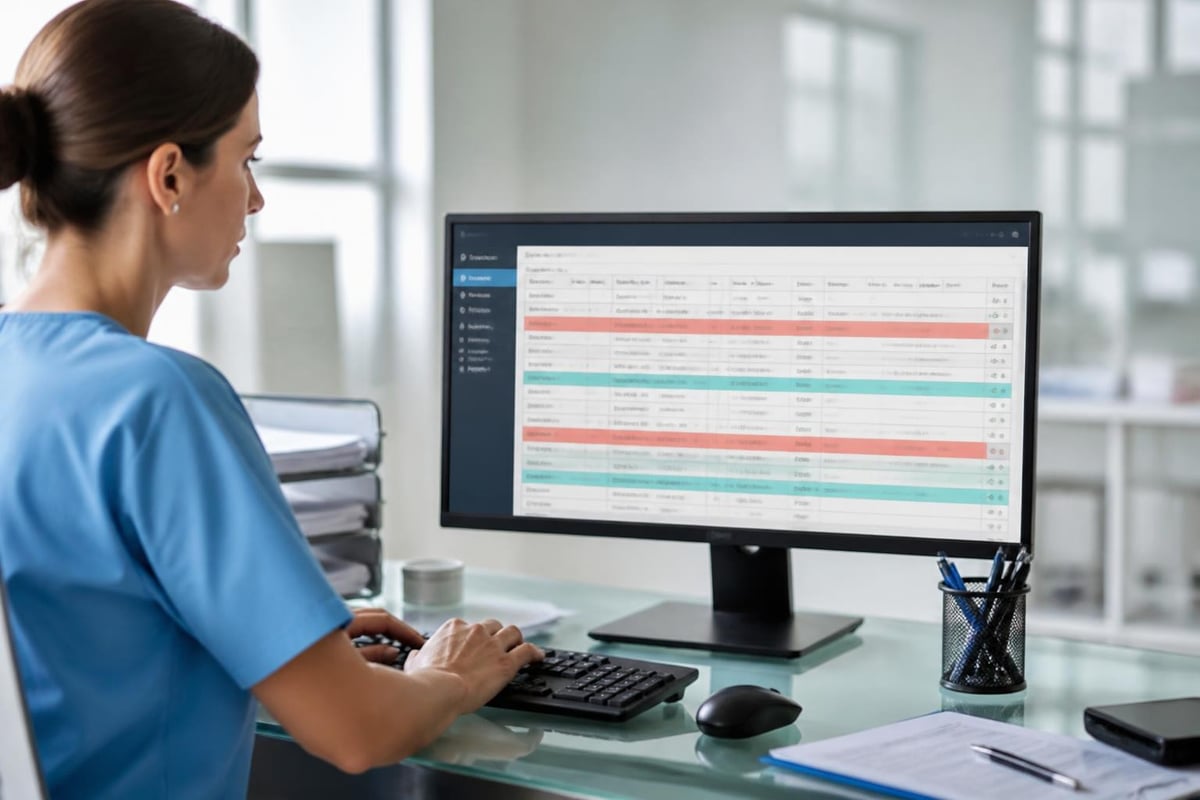
Even with excellent processes, some claims will face denial. Effective medical billing management requires a systematic approach to analyzing denials, correcting errors, and resubmitting or appealing as appropriate.
| Denial Category | Common Causes | Resolution Approach |
|---|---|---|
| Technical | Missing information, incorrect patient data | Correct and resubmit within 30 days |
| Clinical | Medical necessity not supported | Provide additional documentation, consider appeal |
| Authorization | Lack of prior approval | Retroactive authorization or patient responsibility |
| Timely filing | Claim submitted after deadline | Appeal if extenuating circumstances exist |
Tracking denial reasons reveals patterns that can be addressed through process improvements. Many practices reduce denials by 30-50% within six months of implementing structured denial management programs.
Managing Accounts Receivable Effectively
Outstanding accounts receivable (AR) represents money earned but not yet collected. Medical billing management must balance aggressive collection efforts with maintaining positive patient relationships.
AR Aging and Follow-up Protocols
Healthcare practices should monitor AR aging categories closely, with specific action protocols for each timeframe:
0-30 days: Initial claim submission and acknowledgment monitoring
31-60 days: First follow-up on unpaid claims
61-90 days: Second follow-up and identification of issues
91-120 days: Escalated collection efforts and appeal preparation
120+ days: Final collection attempts before write-off or external collections
Best practice targets suggest keeping 60% or more of AR in the 0-30 day category, with less than 15% aging beyond 90 days. Regular AR reviews identify problematic payers and services requiring process adjustments.
Patient Payment Collection
With high-deductible health plans becoming the norm, patient responsibility now represents 25-35% of practice revenue for many specialties. Collecting these amounts requires different strategies than insurance collections.
Successful patient collection strategies include:
- Discussing costs before services are rendered
- Collecting copays and estimated patient portions at check-in
- Offering multiple payment options (credit cards, payment plans, online portals)
- Sending clear, itemized statements within seven days of service
- Following up on outstanding balances within 30 days
Payment plans increase collection rates on larger patient balances. Practices offering structured payment options collect 40-60% more from patients with balances over $500 compared to those demanding full payment.
Leveraging Technology in Medical Billing Management
Modern medical billing management relies heavily on integrated technology platforms that connect practice management, electronic health records, and billing functions.
Integrated Practice Management Systems
Using integrated EHR and EPM systems eliminates duplicate data entry and ensures consistency across clinical and billing records. These platforms provide:
- Real-time eligibility verification
- Automated charge capture from clinical documentation
- Built-in coding assistance and compliance checks
- Electronic claims submission and status tracking
- Comprehensive reporting and analytics
The investment in robust practice management software typically returns 3-5 times its cost through improved collections, reduced staffing needs, and decreased claim denials.
Analytics and Performance Monitoring
Data-driven medical billing management requires regular monitoring of key performance indicators (KPIs). Dashboard views provide at-a-glance assessment of revenue cycle health.
Essential billing KPIs include:
- Days in AR (target: under 40 days)
- Clean claims rate (target: 95%+)
- Denial rate (target: under 5%)
- Collection rate (target: 95%+)
- Cost to collect (target: under 3% of collections)
Trending these metrics monthly reveals the impact of process changes and highlights areas needing attention. Practices achieving top-quartile performance in these metrics typically generate 15-25% more revenue from the same service volume.

Ensuring Regulatory Compliance
Medical billing management operates within a complex regulatory environment where non-compliance carries significant financial and legal consequences.
HIPAA and Data Security
HIPAA compliance in medical billing protects patient privacy while ensuring appropriate information sharing for payment purposes. Billing staff must understand what information can be disclosed, to whom, and under what circumstances.
Security measures for billing operations include:
- Encrypted transmission of all electronic claims and patient data
- Access controls limiting staff to information needed for their roles
- Regular security training for all billing personnel
- Business associate agreements with all vendors handling protected health information
- Incident response protocols for potential breaches
Violations can result in penalties ranging from $100 to $50,000 per incident, with annual maximums reaching $1.5 million per violation category.
Fraud and Abuse Prevention
Medical billing management must prevent both intentional fraud and unintentional errors that could be construed as abuse. Regular compliance audits identify areas of risk before they become problems.
Common risk areas include:
- Upcoding (billing a higher-level service than provided)
- Unbundling (separately billing services that should be combined)
- Duplicate billing for the same service
- Billing for services not rendered
- Improper use of modifiers
Implementing compliance programs with clear policies, regular training, and systematic audits protects practices from allegations of fraudulent billing. Following medical billing best practices establishes defensible processes that demonstrate good faith efforts to bill correctly.
Building High-Performing Billing Teams
The human element remains crucial in medical billing management despite advancing technology. Well-trained, motivated billing staff drive superior financial performance.
Staff Training and Development
Billing regulations, payer policies, and coding requirements change constantly. Ongoing education keeps staff current and competent. Effective training programs include:
- Annual coding updates for ICD and CPT changes
- Payer-specific policy training as contracts are negotiated
- Software training when systems are upgraded or changed
- Compliance education covering regulatory requirements
- Customer service skills for patient interactions
Certification programs through AAPC or AHIMA provide standardized knowledge assessment and demonstrate staff commitment to professional development. Practices with 75% or more certified billing staff typically outperform those with uncertified teams by 12-18% in collection rates.
Performance Metrics and Accountability
Individual performance tracking encourages accountability and identifies coaching opportunities. Metrics should align with overall practice goals while accounting for factors beyond individual control.
| Staff Role | Key Metrics | Performance Targets |
|---|---|---|
| Front Desk | Registration accuracy, insurance verification completion | 98% accuracy, 100% verification |
| Coders | Coding accuracy, charts coded per day | 95% accuracy, role-specific volume |
| Billing Specialists | Claims submission timeliness, AR follow-up completion | 100% within 2 days, 95% follow-up completion |
| Payment Posters | Posting accuracy, daily volume | 98% accuracy, role-specific volume |
Regular performance reviews with constructive feedback help staff improve while recognizing strong performers maintains morale and retention.
Vendor Selection and Outsourcing Considerations
Some practices handle medical billing management entirely in-house, while others outsource to specialized billing companies. Many adopt hybrid models, retaining certain functions while outsourcing others.
Evaluating Billing Service Providers
When considering outsourced billing, evaluate potential vendors on multiple criteria beyond just cost. The cheapest option rarely delivers the best results.
Critical vendor evaluation factors:
- Industry experience in your specialty
- Collection performance metrics (ask for references)
- Technology platforms and integration capabilities
- Reporting frequency and detail
- Contract terms and termination provisions
- Fee structure (percentage of collections vs. flat fee)
Most billing services charge 5-8% of collections, though specialty practices with complex billing may see higher rates. This cost should be compared against in-house billing expenses, typically 6-10% of collections when fully loaded with salaries, benefits, software, and overhead.
Maintaining Control with Outsourced Billing
Practices outsourcing billing should maintain active oversight rather than completely delegating financial management. Regular meetings reviewing performance metrics, denial trends, and collection efforts ensure the vendor performs according to expectations.
Retaining certain functions in-house, such as patient payment collection and insurance verification, often yields better results than complete outsourcing. This hybrid approach maintains patient relationships while leveraging vendor expertise for complex payer interactions.
Mastering medical billing management requires attention to processes, technology, compliance, and people across the entire revenue cycle. By implementing proven revenue cycle management strategies and maintaining focus on continuous improvement, practices can optimize financial performance while ensuring regulatory compliance. Medical Management offers comprehensive resources and practical guides to help your practice enhance billing operations, improve collections, and achieve sustainable financial health through effective management strategies tailored to modern healthcare challenges.