

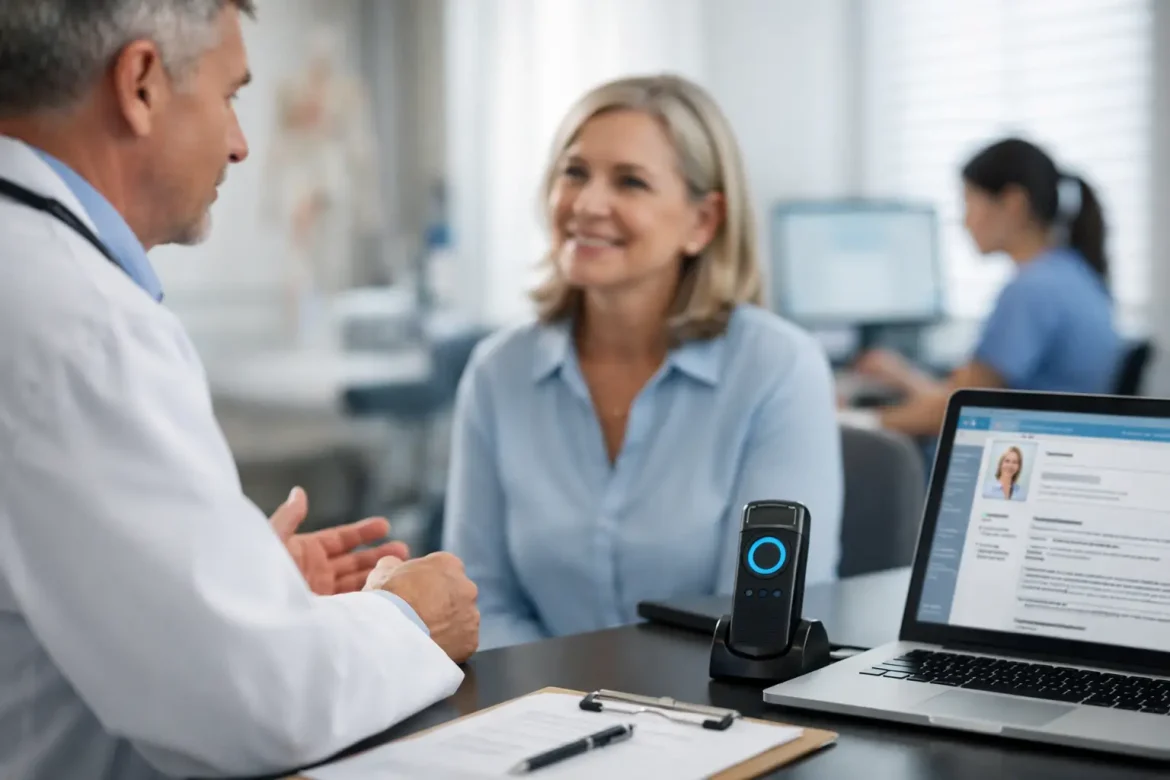
A physician finishes a complex follow-up visit, turns to the EHR, and realizes the note is already drafted, the assessment is organized, and the plan is ready for review. That moment captures the future of ambient clinical documentation more clearly than any product demo. For medical practices, the question is no longer whether ambient tools will enter clinical workflows. It is whether leaders will adopt them in a way that improves efficiency without weakening documentation quality, privacy safeguards, or patient trust.
For busy practices, ambient clinical documentation promises something very specific: fewer clicks, less after-hours charting, and more attention on the patient. But the future will not be defined by transcription alone. It will be shaped by how these tools integrate with clinical reasoning, coding, compliance, staff roles, and communication standards across the practice.
Why the future of ambient clinical documentation matters now
The pressure behind adoption is practical, not theoretical. Physicians are still dealing with documentation burden, staffing shortages, revenue cycle scrutiny, and rising patient expectations. Ambient systems entered the market as note-generation tools, but they are quickly becoming workflow systems that sit closer to the core of care delivery.
That matters because documentation is not an administrative side task. It affects coding accuracy, continuity of care, medico-legal protection, quality reporting, and the patient’s perception of whether the clinician was truly present. If an ambient system reduces screen time but creates vague assessments or billing inconsistencies, the practice has not solved the real problem. It has moved it.
This is why the next phase of adoption will favor practices that treat ambient documentation as an operational decision, not just a technology purchase.
What ambient clinical documentation will likely become
In the near term, most systems will move beyond simple speech capture and summary generation. They will become more context-aware, more specialty-specific, and more tightly connected to the EHR and downstream workflows.
From note creation to visit intelligence
Today, many tools focus on producing a usable progress note. Tomorrow, the stronger platforms will help structure the entire encounter. They will identify missing elements, surface relevant history, suggest orders for review, and flag documentation gaps tied to coding or quality measures.
That does not mean the software is practicing medicine. It means the tool is becoming better at organizing clinical information around the way physicians actually work. In primary care, that may mean pulling forward chronic disease context and preventive care reminders. In orthopedics, it may mean structuring procedural details consistently. In behavioral health, it may require greater nuance and tighter privacy controls.
More specialty-specific performance
General-purpose note generation can save time, but specialty care exposes its limits quickly. The future of ambient clinical documentation will depend heavily on specialty-specific training, templates, and clinical vocabulary handling.
A cardiology visit, a dermatology procedure, and a fertility consultation are not documentation variants of the same task. They have different terminology, different risk sensitivities, and different billing patterns. Practices should expect the market to separate more clearly between broad ambient tools and platforms that perform well in defined specialties.
Better integration with operations
The most valuable ambient systems will not stop at the note. They will increasingly support pre-visit planning, coding review, patient instructions, after-visit summaries, and possibly even task routing to staff.
This is where practice leaders should pay attention. When ambient documentation feeds scheduling workflows, billing review, referral management, and patient communication, the return on investment changes. The value shifts from individual physician convenience to broader operational efficiency.
The biggest benefits and the real trade-offs
The upside is clear. A well-implemented ambient system can reduce pajama-time charting, improve clinician focus during visits, and create more consistent documentation. It may also support physician recruitment and retention in groups where documentation burden is a serious pain point.
Still, the trade-offs deserve equal attention.
First, note quality can drift if clinicians become passive reviewers. A polished note is not always a precise one. Ambient tools may smooth over uncertainty, omit meaningful negatives, or present assumptions as facts. In specialties where medical decision-making must be carefully defended, that is a real risk.
Second, privacy and consent will remain central. Patients may accept ambient listening in one setting and resist it in another. Sensitive visits, family dynamics, mental health concerns, and language barriers all affect comfort levels. Practices will need clear communication scripts, consistent consent processes, and an option to turn the system off without disrupting care.
Third, documentation speed does not automatically equal billing strength. If the note is fast but under-detailed, coding may suffer. If the tool overdocuments or inserts generic language, auditors may notice. The future belongs to practices that validate note output against coding and compliance standards, not just clinician satisfaction.
What practice leaders should prepare for now
The smartest organizations are not waiting for perfect technology. They are building the internal habits that will make adoption successful.
Set documentation standards before rollout
Do not begin with the software interface. Begin with your clinical documentation standards. What must every note include? Where are your current failure points? Which specialties or providers struggle most with time, consistency, or coding alignment?
Without this baseline, it becomes difficult to judge whether the tool is helping. A practice may feel faster while producing weaker documentation. Strong leadership teams define quality first, then evaluate whether ambient tools support it.
Involve physicians, managers, and front-office staff
Ambient documentation affects more than the clinician. It changes room workflow, patient expectations, scribe responsibilities, and sometimes even the timing of checkout and follow-up communication.
A rollout designed only by IT or only by a physician champion often misses these details. Practice managers should map the patient journey from check-in to note sign-off and identify where ambient tools create friction or savings. This is especially important in multi-provider clinics where one physician’s preferred workflow may not fit the rest of the team.
Pilot in the right setting
Not every department is the best starting point. A high-volume follow-up clinic with predictable visit structure often provides a cleaner pilot than a service line with highly sensitive conversations or frequent interpreter use.
The right pilot lets leadership test note accuracy, physician adoption, patient comfort, and compliance oversight before expanding. It also gives the practice real examples to use in staff training.
How AI governance will separate strong adopters from risky ones
As ambient tools become more capable, governance will matter as much as functionality. This is where many practices still underestimate the work involved.
Governance is not just a legal review or a vendor questionnaire. It includes policies for patient consent, clinician review responsibility, note editing expectations, data retention, escalation of documentation errors, and monitoring for bias or hallucinated content.
For independent practices, this does not need to become bureaucratic. But it does need to be explicit. Someone should own the process. Someone should review performance. Someone should know what happens when the system gets it wrong.
This is also where educational platforms such as Medical Management & ΕΠΙΚΟΙΝΩΝΙΑ can be especially useful to the market. The practices that benefit most from AI are usually not the ones chasing every new tool. They are the ones pairing adoption with clear management discipline.
The patient experience will decide long-term success
Many vendors position ambient documentation as invisible. In real practice, it is not invisible. Patients notice devices, microphones, prompts, and how clinicians explain their use.
That means patient communication will become a competitive advantage. A brief, confident explanation can increase comfort and reinforce professionalism: the technology helps capture the visit accurately, the clinician reviews every note, and the patient can ask to pause it at any time. That message supports trust.
The opposite is also true. If the tool is introduced awkwardly, if patients feel recorded rather than heard, or if a generated note creates confusion in the portal, adoption will stall. The future of ambient clinical documentation is partly a technology story, but it is also a communication story.
What the next few years will reward
Practices should expect more vendors, more EHR partnerships, and more claims about time savings. Some of those claims will be valid. Some will not survive real-world use. The winners will likely be systems that combine reliable specialty performance, strong integration, transparent privacy controls, and measurable operational value.
For physician owners and clinic administrators, the practical question is simple: does this tool help the practice document better, code more accurately, communicate more clearly, and protect clinician time? If the answer is only that it writes notes quickly, that is not enough.
The future is promising, but it is not automatic. Ambient documentation can absolutely reduce friction in care delivery. It can also create new forms of risk if deployed casually. The opportunity for medical practices is to adopt early with discipline, train teams carefully, and treat every generated note as part of both clinical care and business performance.
The practices that get this right will not just have faster documentation. They will have more attentive visits, stronger workflows, and a better foundation for the kind of medicine patients can feel.