


The healthcare industry continues to evolve rapidly, with increasing complexity in regulations, technology integration, and patient expectations. At the heart of managing these challenges stands the medical services manager, a critical leadership role responsible for ensuring healthcare facilities operate efficiently while maintaining exceptional patient care standards. This position combines administrative expertise with healthcare knowledge, requiring professionals who can navigate both clinical and business aspects of medical practice operations. As healthcare organizations seek to optimize performance and adapt to changing industry demands, understanding this vital role becomes essential for both aspiring professionals and facilities looking to strengthen their management teams.
Core Responsibilities and Daily Functions
A medical services manager oversees multiple facets of healthcare facility operations, balancing strategic planning with day-to-day management tasks. These professionals coordinate departmental activities, manage budgets, ensure regulatory compliance, and implement policies that improve both operational efficiency and patient outcomes.
The role encompasses several key responsibility areas:
- Financial oversight including budget development, cost control, and revenue cycle management
- Staff coordination involving hiring, training, scheduling, and performance evaluation
- Quality assurance monitoring patient care standards and implementing improvement initiatives
- Regulatory compliance ensuring adherence to healthcare laws, safety protocols, and accreditation requirements
- Technology integration overseeing electronic health records and other healthcare information systems
- Strategic planning developing long-term goals and operational strategies
Daily activities vary depending on facility size and specialty. In smaller clinics, a medical services manager might directly handle patient scheduling issues, vendor negotiations, and staff meetings within the same morning. Larger hospital departments require more specialized focus on policy development, cross-departmental coordination, and executive reporting.

Operational Management Excellence
Effective operational management separates high-performing facilities from those struggling with inefficiencies. Medical services managers analyze workflow patterns, identify bottlenecks, and implement solutions that streamline processes without compromising care quality.
Patient flow optimization represents a critical operational focus. This involves coordinating appointment scheduling, reducing wait times, managing examination room utilization, and ensuring smooth transitions between departments. Successful managers use data analytics to identify peak demand periods and adjust staffing accordingly.
Supply chain management also falls within this domain. Maintaining appropriate inventory levels while controlling costs requires careful vendor relationships, strategic purchasing, and waste reduction initiatives. Many facilities have reduced supply expenses by 15-20% through systematic management approaches.
Required Skills and Qualifications
The complexity of healthcare administration demands a diverse skill set combining technical knowledge, leadership abilities, and interpersonal competencies. Most positions require at minimum a bachelor's degree in healthcare administration, business administration, or a related field, though many employers prefer candidates with master's degrees.
Educational Pathways
| Degree Level | Common Programs | Career Entry Point |
|---|---|---|
| Bachelor's | Healthcare Administration, Business, Public Health | Assistant Manager, Department Coordinator |
| Master's | MBA Healthcare, MHA, MPH | Medical Services Manager, Department Director |
| Doctoral | DHA, PhD Healthcare Administration | Senior Executive, Chief Operating Officer |
Professional certifications enhance credibility and demonstrate specialized expertise. The Certified Medical Manager (CMM) and Fellow of the American College of Healthcare Executives (FACHE) credentials are particularly valued in the industry.
Beyond formal education, successful medical services managers develop strong capabilities in several areas. Financial acumen enables effective budget management and strategic resource allocation. Leadership skills foster team cohesion and motivate staff toward shared objectives. Communication abilities facilitate collaboration with physicians, nurses, administrative staff, and external stakeholders.
Technical proficiency has become increasingly important as healthcare digitization accelerates. Familiarity with electronic health record systems, practice management software, and data analytics platforms is now essential rather than optional.
Compensation and Career Outlook
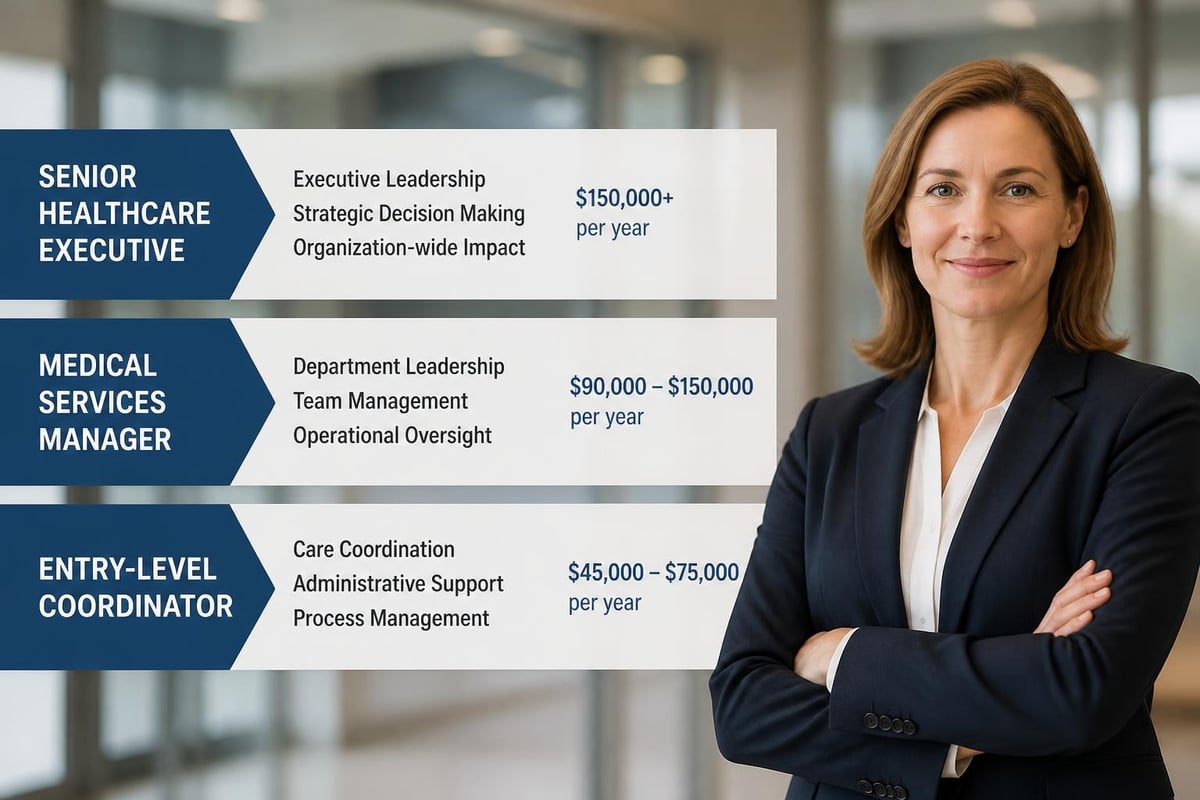
The financial rewards for medical services managers reflect the position's complexity and responsibility level. Salary levels vary significantly based on experience, location, and facility type, with metropolitan areas and specialized facilities typically offering higher compensation.
According to recent industry data, entry-level positions start around $65,000 annually, while experienced managers in major healthcare systems can earn $120,000 or more. Those advancing to executive roles such as Chief Operating Officer or Vice President of Operations often command salaries exceeding $200,000.
Geographic Salary Variations
Compensation varies substantially by region due to cost of living differences and market demand:
- West Coast metropolitan areas: $95,000 – $145,000
- Northeast urban centers: $88,000 – $135,000
- Midwest cities: $75,000 – $115,000
- Southern regions: $72,000 – $110,000
- Rural communities: $65,000 – $95,000
The career outlook remains exceptionally strong through 2026 and beyond. Healthcare employment continues expanding as the population ages and medical services become more sophisticated. The Bureau of Labor Statistics projects faster-than-average growth for healthcare management positions, creating abundant opportunities for qualified professionals.
Navigating Common Challenges
Every medical services manager encounters obstacles requiring creative problem-solving and resilience. Staff shortages, particularly in nursing and specialized technical roles, create scheduling difficulties and operational strain. Effective managers build strong recruitment pipelines, competitive compensation packages, and positive workplace cultures that attract and retain talent.
Regulatory changes present another persistent challenge. Healthcare laws and accreditation standards evolve continuously, requiring constant vigilance and adaptation. Staying current demands ongoing education, professional association involvement, and sometimes consultation with legal and compliance specialists.
Financial pressures intensify as reimbursement models shift and operational costs rise. Many facilities operate on thin margins, making cost control essential while maintaining quality standards. Understanding the full scope of medical services manager responsibilities helps professionals anticipate and address these financial challenges strategically.
Conflict Resolution Strategies
Interpersonal conflicts inevitably arise in high-stress healthcare environments. Medical services managers frequently mediate disputes between staff members, address patient complaints, and navigate disagreements with physicians or executives.
Successful conflict resolution follows a structured approach:
- Listen actively to understand all perspectives without premature judgment
- Gather facts through documentation review and stakeholder interviews
- Identify core issues beneath surface-level complaints or tensions
- Develop solutions collaboratively when possible, decisively when necessary
- Follow up to ensure resolutions stick and relationships repair
Building trust through consistent, fair treatment reduces conflict frequency and severity. Transparent communication about decisions, policies, and organizational changes prevents misunderstandings that often escalate into larger issues.
Technology Integration and Digital Transformation
Modern healthcare management increasingly relies on technology to improve efficiency, enhance patient care, and maintain competitive advantage. Medical services managers lead digital transformation initiatives that fundamentally reshape how facilities operate.
Electronic health record (EHR) implementation represents one of the most significant technology projects. Successful rollouts require careful vendor selection, comprehensive staff training, workflow redesign, and ongoing optimization. Managers who understand both clinical needs and technical capabilities guide these transitions effectively.
Telemedicine platforms have expanded dramatically, creating new service delivery models and operational considerations. Managing virtual care programs involves technology infrastructure, provider training, patient education, billing processes, and quality monitoring.
Data analytics tools enable evidence-based decision making. By analyzing patient volumes, treatment outcomes, staff productivity, and financial metrics, managers identify improvement opportunities and track progress toward organizational goals.
| Technology Type | Primary Benefits | Implementation Challenges |
|---|---|---|
| EHR Systems | Coordinated care, reduced errors, better documentation | Staff resistance, workflow disruption, high costs |
| Telemedicine | Expanded access, convenience, reduced no-shows | Technology barriers, reimbursement issues, licensing |
| Practice Management | Streamlined scheduling, billing, reporting | Integration complexity, training requirements |
| Analytics Platforms | Data-driven decisions, performance tracking | Data quality issues, interpretation expertise needed |
Building High-Performance Teams
The quality of healthcare delivery ultimately depends on the people providing it. Medical services managers shape organizational culture, develop talent, and create environments where staff can excel professionally while delivering exceptional patient care.
Effective hiring processes identify candidates with both technical competencies and cultural fit. Beyond reviewing credentials, successful managers assess problem-solving abilities, communication skills, and alignment with organizational values. Early-career professionals entering medical services management benefit from understanding these hiring criteria as they develop their careers.

Staff development represents an ongoing investment in organizational capability. Training programs keep skills current as medical knowledge and technology evolve. Mentorship opportunities help newer employees learn from experienced colleagues while creating succession planning pathways.
Performance management systems should balance accountability with support. Clear expectations, regular feedback, and fair evaluation processes motivate improvement while identifying those needing additional help or reassignment.
Recognition programs boost morale and retention. Acknowledging excellent performance through formal awards, informal praise, professional development opportunities, or other meaningful gestures reinforces desired behaviors and builds loyalty.
Patient Engagement and Experience Optimization
While medical services managers don't typically provide direct patient care, they profoundly influence patient experiences through the systems, policies, and cultures they create. Patient satisfaction increasingly affects facility reputation, reimbursement rates, and competitive positioning.
Communication processes deserve particular attention. How do patients schedule appointments? How quickly do staff respond to inquiries? How clearly do facilities explain billing, treatment plans, and follow-up care? Streamlining these touchpoints reduces frustration and improves outcomes.
Physical environment management contributes to patient comfort and perceptions of quality. Clean, well-maintained facilities with comfortable waiting areas, clear signage, and appropriate amenities create positive impressions before clinical interactions even begin.
Accessibility initiatives ensure diverse patient populations receive equitable care. This includes language translation services, accommodations for disabilities, extended hours for working patients, and cultural competency training for staff.
Feedback systems provide valuable insights for continuous improvement. Patient surveys, online reviews, and complaint resolution processes reveal both strengths to celebrate and weaknesses requiring attention. The comprehensive job description for medical services managers increasingly emphasizes these patient-centered responsibilities.
Regulatory Compliance and Risk Management
Healthcare operates within an exceptionally complex regulatory environment spanning federal, state, and local jurisdictions. Medical services managers ensure facilities meet all applicable requirements while managing risks that could compromise patient safety, financial stability, or legal standing.
Privacy regulations, particularly HIPAA requirements, demand constant vigilance. Managers implement technical safeguards for electronic records, physical security for paper documents, administrative policies governing information access, and staff training on confidentiality obligations. Violations carry severe penalties including substantial fines and criminal charges.
Safety standards protect both patients and staff. Infection control protocols, emergency preparedness plans, equipment maintenance schedules, and workplace safety programs all fall under management oversight. Regular audits identify compliance gaps before regulatory inspectors or adverse events expose them.
Accreditation maintenance through organizations like The Joint Commission requires systematic documentation, policy adherence, and continuous quality improvement. Successful accreditation surveys validate operational excellence and often influence insurance contracting and public reputation.
Risk management programs proactively identify potential problems and implement preventive measures. This encompasses malpractice prevention, incident reporting systems, quality assurance committees, and insurance coverage coordination. When adverse events occur, effective managers ensure appropriate response, documentation, and learning to prevent recurrence.
Strategic Planning and Organizational Development
Beyond maintaining current operations, forward-thinking medical services managers drive organizational growth and adaptation. Strategic planning processes define long-term vision, set measurable objectives, and allocate resources to achieve desired outcomes.
Market analysis informs strategic decisions. Understanding community health needs, competitor offerings, demographic trends, and regulatory changes helps facilities position themselves effectively. A pediatric clinic in a rapidly aging community might pivot toward geriatric services, while an urban hospital might expand outpatient surgery capacity as healthcare shifts from inpatient to ambulatory settings.
Service line development creates new revenue streams and addresses unmet patient needs. Launching a specialized program requires market assessment, financial modeling, staff recruitment, space allocation, equipment acquisition, and marketing initiatives. Successful managers coordinate these elements while maintaining existing operations.
Partnership opportunities extend organizational capabilities. Collaborations with physicians, other healthcare facilities, community organizations, technology vendors, or educational institutions can enhance services, reduce costs, or improve market reach. Evaluating and negotiating these relationships requires business acumen and relationship management skills.
Mastering the multifaceted role of medical services manager requires continuous learning, adaptability, and commitment to both operational excellence and patient-centered care. Whether you're managing a small clinic or a large hospital department, these principles and strategies provide a foundation for success in healthcare administration. Medical Management offers comprehensive resources, practical guides, and proven strategies to help healthcare professionals optimize their practice operations, enhance patient engagement, and achieve sustainable performance improvements in today's dynamic healthcare environment.