

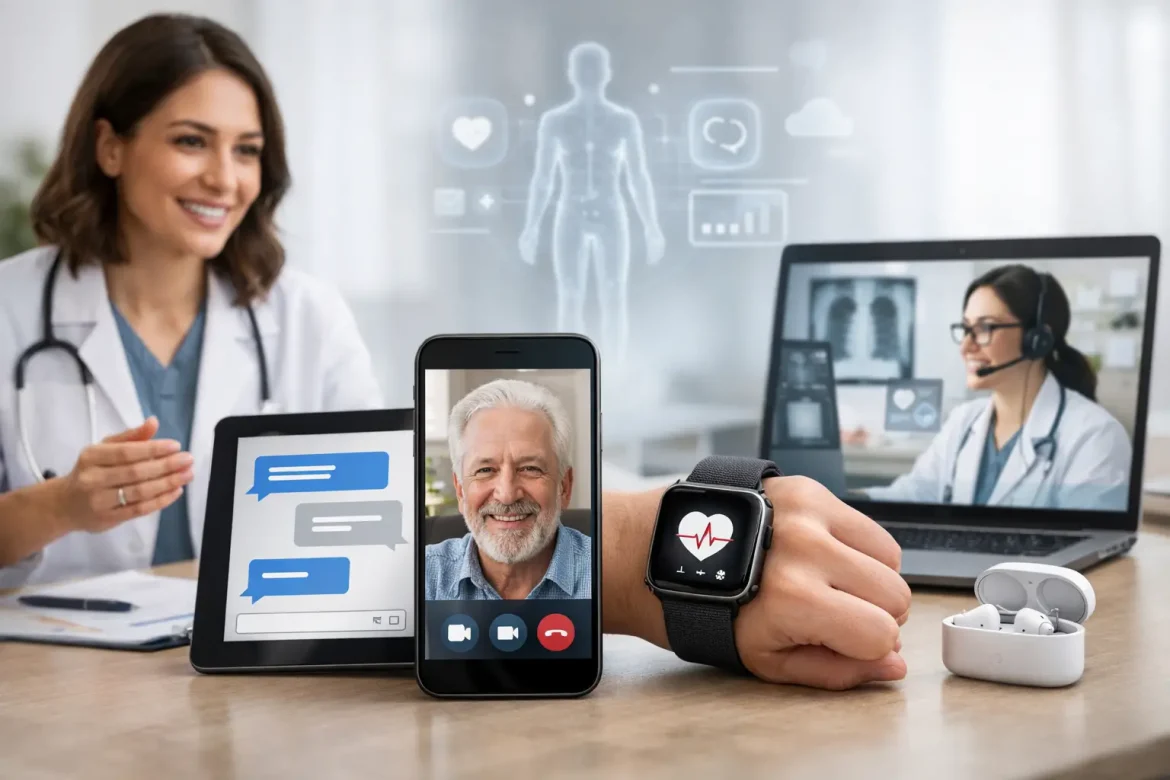
A missed call used to be a minor inconvenience. In many practices now, it is a lost appointment, a delayed authorization, an unanswered lab question, and sometimes a patient who decides not to come back. That is why the future of patient communication matters far beyond courtesy. It is becoming a core operational function that affects revenue, trust, compliance, staff workload, and clinical continuity.
For physicians, practice managers, and clinic owners, the real question is not whether patient communication will change. It already has. The question is which changes are worth adopting, which ones create new risks, and how to build a communication model that patients actually use without overwhelming the team.
1. The future of patient communication is omnichannel by default
Patients no longer think in channels. They think in tasks. They want to book, confirm, ask, upload, reschedule, pay, and follow up using the method that feels fastest in the moment. For one patient that may be text. For another, a portal message. For a third, a phone call because the issue feels urgent or sensitive.
Practices that force all communication into one route usually create friction. Phone-only access frustrates working adults. Portal-only access excludes less tech-comfortable patients. Email without workflow control creates safety and response-time problems.
The practical shift is to offer a limited set of approved channels with clear rules behind them. That usually means phone, text, portal, and email for defined use cases. The goal is not to be everywhere. It is to make each channel purposeful, documented, and manageable.
This is where many practices get stuck. More channels can improve access, but they also create fragmentation if staff members are checking separate inboxes all day. The better model is channel choice on the patient side and centralized workflow on the practice side.
2. Speed will matter more, but so will expectation-setting
Patients increasingly compare medical communication to every other service interaction in their lives. That does not mean healthcare should imitate retail, but it does mean response expectations are changing. A message that sits for two business days may feel acceptable internally and careless externally.
The solution is not simply to answer everything instantly. That is unrealistic for most offices and can train patients to use the wrong channel for the wrong issue. The better strategy is transparent response standards. If texts are answered during office hours, say so. If portal messages are reviewed within one business day, state that clearly. If urgent symptoms require a call, repeat that in every automated message.
Fast communication is helpful. Predictable communication is often even more valuable. Patients tolerate waiting better when they know what will happen next.
Where practices should be careful
Raising speed expectations without adding workflow discipline creates burnout. Front-desk teams and MAs can end up trapped in constant message handling, with frequent interruptions and no triage standards. In the future of patient communication, responsiveness will be a competitive advantage, but only if practices define service levels and assign ownership clearly.
3. Automation will handle routine tasks, not replace judgment
Automation is already changing how practices communicate. Appointment reminders, intake prompts, recall campaigns, payment notices, post-visit instructions, and satisfaction surveys can all be triggered automatically. Used well, this reduces no-shows, shortens administrative delays, and frees staff for higher-value interactions.
Used poorly, it creates noise. Patients receive too many reminders, duplicate requests, or generic messages that do not reflect their situation. A patient awaiting biopsy results should not receive cheerful promotional outreach the same day. A patient who already completed forms should not get three more requests.
That is the trade-off. Automation improves consistency, but only when it is built around timing, relevance, and logic.
For practice leaders, the operational question is simple: which messages truly need a human, and which ones should never require staff time? Most routine scheduling, confirmations, and basic education can be automated. Conversations involving diagnosis, anxiety, changing treatment plans, financial sensitivity, or clinical uncertainty still need human judgment.
4. AI will become a communication assistant, with limits
AI is likely to become one of the biggest forces in the future of patient communication, especially in triage support, message drafting, translation assistance, summarization, and FAQ handling. For busy practices, that can be a real advantage. Staff may save time on repetitive replies. Physicians may get cleaner message summaries. Patients may get after-hours help with nonclinical administrative questions.
But healthcare professionals should be careful not to confuse linguistic fluency with clinical reliability. AI can produce polished responses that sound correct while missing context, risk, or nuance. That matters a great deal when a patient describes symptoms imprecisely or asks a question with medicolegal implications.
A practical approach is to use AI as a first-pass assistant rather than an autonomous communicator. Let it draft, sort, translate, and summarize. Keep humans responsible for review, escalation, and final decisions in clinically meaningful interactions.
This is also a trust issue. Patients may accept AI-supported communication if it makes access easier and answers faster. They are less likely to respond well if they feel they are being screened out of human care. The distinction matters. AI should reduce friction, not create emotional distance.
5. Personalization will shift from marketing tactic to care expectation
Patients increasingly expect communication that reflects where they are in their care journey. A new patient needs orientation. A chronic care patient needs continuity. A surgical patient needs timed preparation and recovery guidance. A preventive care patient may need reminders tied to age, risk, or history.
This does not require elaborate campaigns. It requires segmentation and clinical common sense. Messages should match the patient’s stage, condition, and likely concerns. That means less mass broadcasting and more structured communication pathways.
What personalization really means in practice
For most medical offices, personalization starts with three operational habits: using the right patient name and provider context, sending messages tied to actual care milestones, and avoiding generic language when a more specific instruction would prevent confusion.
Personalization also helps reduce inbound volume. When patients receive clear preparation instructions, realistic timelines, and relevant follow-up guidance, they ask fewer repetitive questions. Better communication is not only about patient satisfaction. It is a capacity strategy.
6. Trust, privacy, and clarity will become stronger differentiators
As communication becomes more digital, every practice will face the same tension: patients want convenience, but they also want confidentiality. They appreciate text reminders, online forms, and quick digital exchanges, yet they remain highly sensitive to how medical information is handled.
That means communication design cannot be separated from compliance and risk management. Staff need to know what can be texted, what belongs in the portal, how consent is captured, and how identity is verified when issues become sensitive. Templates should be reviewed not only for tone, but also for privacy exposure and clinical ambiguity.
Clarity matters just as much as security. Many patient communication failures are not caused by lack of effort. They are caused by vague wording. “Your results are available” may trigger anxiety. “Dr. Patel reviewed your routine lab work and recommends a follow-up visit to discuss next steps” gives more direction. The future will favor practices that communicate plainly, respectfully, and with less room for misunderstanding.
7. Communication performance will be measured like any other system
One of the biggest changes ahead is managerial. Patient communication is moving from soft skill to measurable process. Practices will increasingly track response times, unanswered message volume, confirmation rates, no-show reduction, portal adoption, review sentiment, and conversion from inquiry to scheduled visit.
That shift is healthy. What gets measured can be improved. But metrics need context. A faster response time is not always better if staff are rushing or escalating unnecessarily. High portal adoption is not useful if messages are poorly triaged. The right question is whether communication supports both patient experience and practice efficiency.
For leaders, this means assigning communication ownership the same way they assign ownership for billing, scheduling, or collections. Someone should be responsible for templates, workflows, escalation rules, training, and periodic review. Without ownership, communication becomes everybody’s job and nobody’s system.
How to prepare for the future of patient communication now
Most practices do not need a complete overhaul. They need a communication audit. Start by reviewing where delays, confusion, and repeat questions happen most often. Look at missed calls, unmonitored inboxes, inconsistent scripts, slow portal replies, and handoffs between front desk and clinical staff.
Then make targeted changes. Standardize your channel rules. Build response-time expectations. Automate routine touchpoints. Train staff on tone and escalation. Review whether your current technology reduces work or simply moves it around. If you adopt AI, start with low-risk use cases and monitor closely.
The future of patient communication will not be won by the practice with the most tools. It will be won by the practice that communicates clearly, responds predictably, protects trust, and designs workflows that respect both patients and staff.
Patients remember how hard it was to reach you, how clearly you explained the next step, and whether the office felt organized when they needed help. That is not a side issue. It is part of care, and it is one of the most practical places to improve the modern medical practice.