


The healthcare industry demands exceptional operational efficiency to deliver quality patient care while maintaining financial sustainability. An operations manager healthcare professional serves as the critical bridge between clinical excellence and administrative effectiveness, orchestrating the complex systems that keep medical facilities running smoothly. These leaders navigate regulatory compliance, staff management, patient satisfaction, and resource allocation while adapting to technological advances and evolving healthcare delivery models. Understanding this multifaceted role is essential for medical practices seeking to enhance their operational performance and achieve sustainable growth in an increasingly competitive environment.
Core Responsibilities of Healthcare Operations Managers
Healthcare operations management encompasses a diverse range of responsibilities that directly impact both patient outcomes and organizational success. These professionals oversee daily operations across multiple departments, ensuring seamless coordination between clinical and administrative functions.
Daily Operational Oversight
An operations manager healthcare specialist manages the fundamental activities that keep medical facilities functioning effectively. This includes monitoring patient flow, coordinating staff schedules, and ensuring adequate supply inventories. They analyze workflow patterns to identify bottlenecks and implement solutions that reduce wait times and improve patient experiences.
Key daily management tasks include:
- Supervising support services such as housekeeping, security, and maintenance
- Coordinating with clinical department heads to align operational priorities
- Managing vendor relationships and supply chain logistics
- Monitoring compliance with health and safety regulations
- Addressing immediate operational challenges and patient concerns
The role requires constant vigilance across all operational aspects, from emergency preparedness to routine administrative processes. Operations managers must anticipate problems before they escalate and develop contingency plans that maintain service continuity during unexpected disruptions.

Strategic Planning and Performance Optimization
Beyond daily management, operations manager healthcare professionals drive strategic initiatives that position medical practices for long-term success. They develop and implement operational strategies aligned with organizational goals, analyzing performance metrics to identify improvement opportunities.
Strategic responsibilities extend to:
- Developing annual operational budgets and monitoring financial performance
- Implementing quality improvement initiatives based on patient satisfaction data
- Planning facility expansions or renovations to accommodate growth
- Establishing key performance indicators (KPIs) to measure operational effectiveness
- Creating disaster recovery and business continuity plans
These leaders collaborate with executive teams to translate strategic visions into actionable operational plans. They balance short-term efficiency gains with long-term sustainability, ensuring that operational decisions support both immediate needs and future objectives.
Essential Skills for Operations Management Excellence
Success in healthcare operations management requires a unique combination of technical expertise, leadership capabilities, and interpersonal skills. The most effective operations managers cultivate competencies across multiple domains.
Technical and Analytical Competencies
Modern healthcare operations increasingly rely on data-driven decision making. An operations manager healthcare professional must demonstrate proficiency in healthcare information systems, financial analysis, and quality metrics interpretation. The growing application of data analytics in operations management has transformed how healthcare leaders identify trends and optimize processes.
| Competency Area | Key Skills | Application |
|---|---|---|
| Financial Management | Budgeting, Cost Analysis, Revenue Cycle | Resource allocation, expense control |
| Data Analytics | Statistical Analysis, Dashboard Development, Trend Identification | Performance monitoring, predictive planning |
| Technology Systems | EHR/EMR, Scheduling Software, Inventory Management | Process automation, efficiency improvement |
| Regulatory Knowledge | HIPAA, OSHA, Joint Commission Standards | Compliance assurance, risk mitigation |
Understanding emerging technologies represents a critical advantage. Operations managers who embrace innovations such as machine learning frameworks designed for improving hospital operations through multimodal data integration can unlock significant efficiency gains and quality improvements.
Leadership and Communication Abilities
Technical skills alone cannot sustain operational excellence. Effective operations manager healthcare professionals excel at leading diverse teams, managing conflicts, and facilitating collaboration across departments.
Essential leadership qualities include:
- Emotional intelligence: Understanding staff motivations and managing workplace dynamics
- Change management: Guiding teams through operational transitions and technology implementations
- Conflict resolution: Addressing interpersonal issues and departmental disagreements constructively
- Stakeholder engagement: Building relationships with physicians, administrators, patients, and community partners
- Coaching and development: Mentoring staff and cultivating future leaders
Communication represents perhaps the most critical leadership skill. Operations managers must translate complex operational concepts into accessible language for diverse audiences, from frontline staff to board members. They facilitate difficult conversations about resource constraints, performance gaps, and necessary changes while maintaining team morale and commitment.
Strategies for Optimizing Medical Practice Operations
Implementing effective operational strategies distinguishes high-performing medical practices from their competitors. Operations manager healthcare professionals employ proven methodologies to enhance efficiency and patient satisfaction.
Process Improvement Methodologies
Systematic process improvement frameworks provide structure for identifying and eliminating operational inefficiencies. Lean healthcare principles, Six Sigma approaches, and continuous quality improvement models offer valuable tools for operations managers.
Lean Healthcare Principles:
- Value stream mapping: Documenting every step in patient care processes to identify non-value-added activities
- Waste elimination: Removing unnecessary steps, redundancies, and delays from workflows
- Standardization: Creating consistent protocols that reduce variation and improve outcomes
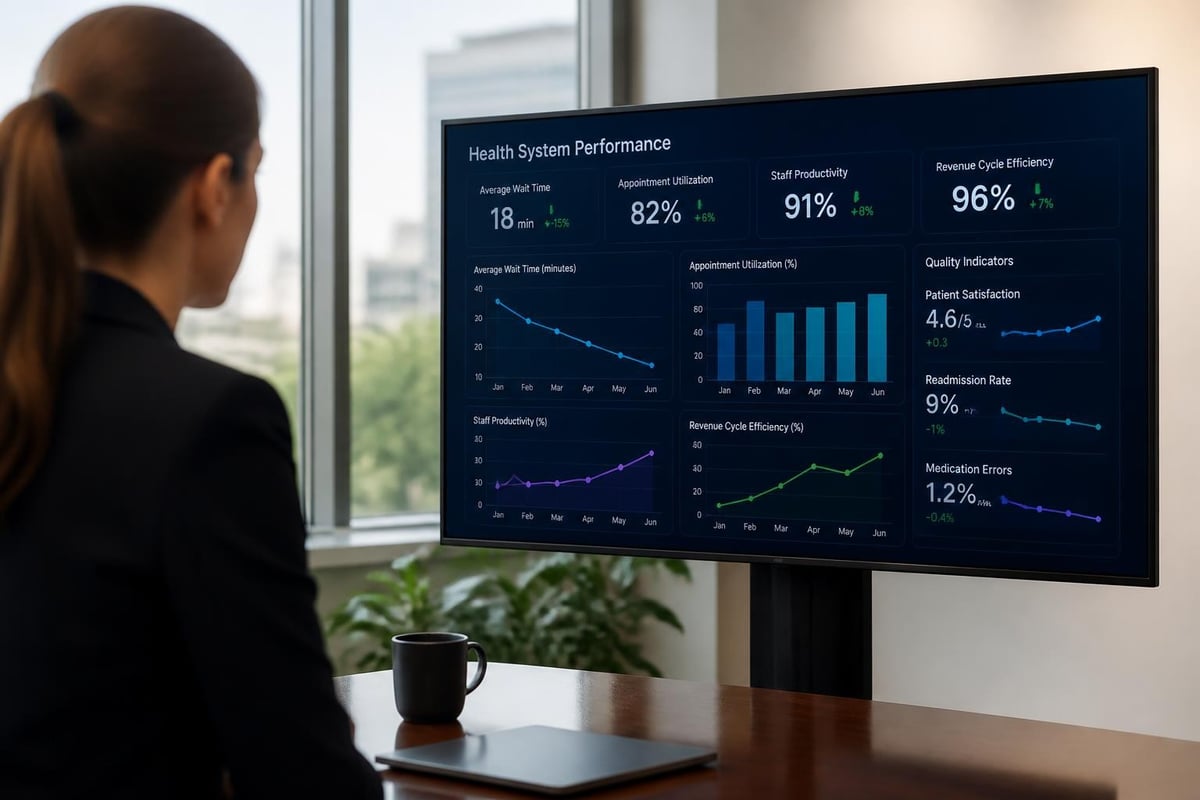
- Visual management: Using dashboards and displays to make performance metrics immediately visible
- Kaizen events: Conducting focused improvement workshops to address specific operational challenges
These methodologies require disciplined implementation and sustained commitment. An operations manager healthcare professional must champion these initiatives while securing buy-in from clinical staff who may initially resist process changes.
Technology Integration and Digital Transformation
Technology adoption accelerates operational improvements when implemented strategically. Operations managers evaluate emerging solutions against specific operational needs, ensuring that technology investments deliver measurable returns.
Modern medical practices benefit from:
- Electronic health records (EHR) that streamline documentation and improve care coordination
- Patient portals enabling self-service appointment scheduling and communication
- Automated appointment reminders reducing no-show rates and optimizing provider schedules
- Telehealth platforms expanding access while reducing facility capacity constraints
- Inventory management systems preventing stockouts while minimizing excess supplies
The deployment and maintenance of machine learning models in healthcare settings presents new opportunities for operations optimization. Forward-thinking operations managers explore artificial intelligence applications for predictive scheduling, resource allocation, and quality monitoring.
Enhancing Patient Experience Through Operational Excellence
Patient satisfaction directly correlates with operational efficiency. An operations manager healthcare professional recognizes that smooth operations create the foundation for positive patient experiences.
Reducing Wait Times and Improving Access
Patient frustration often stems from excessive waiting and difficulty accessing care. Operations managers implement strategies that minimize delays and maximize appointment availability.
Effective access improvement tactics:
- Analyzing appointment data to identify peak demand periods and adjust scheduling templates
- Implementing same-day appointment slots for urgent patient needs
- Optimizing patient flow through improved triage and rooming procedures
- Cross-training staff to provide coverage flexibility during busy periods
- Establishing clear communication protocols for delays and wait time updates
These improvements require careful balancing. Operations managers must optimize efficiency without sacrificing quality or creating staff burnout. They monitor multiple metrics simultaneously, ensuring that reduced wait times don't come at the expense of thoroughness or patient safety.
Creating Patient-Centered Service Standards
Operational policies should reflect patient needs and preferences rather than purely administrative convenience. Operations manager healthcare professionals develop service standards that prioritize patient dignity, communication, and comfort.
| Service Dimension | Standard Examples | Operational Implementation |
|---|---|---|
| Communication | Return calls within 24 hours, explain delays promptly | Staff training, accountability systems |
| Respect | Address patients by preferred names, ensure privacy | Standard protocols, facility design |
| Coordination | Streamline handoffs between departments | Care pathways, electronic referrals |
| Comfort | Clean facilities, comfortable waiting areas | Maintenance schedules, amenity investments |
Medical practices also benefit from maintaining well-stocked emergency supplies. Partnerships with providers like Medical Gear Outfitters ensure that facilities have immediate access to first aid and emergency response equipment, supporting both staff safety and patient care readiness.
Staff Management and Team Development
Healthcare teams perform at their best when properly supported, developed, and engaged. An operations manager healthcare professional invests significant effort in creating positive work environments that attract and retain talented staff.
Recruitment and Retention Strategies
Healthcare facilities face ongoing staffing challenges, making effective recruitment and retention critical operational priorities. Operations managers develop comprehensive workforce strategies that address these challenges proactively.
Recruitment best practices include:
- Creating detailed job descriptions that accurately reflect responsibilities and required qualifications
- Building relationships with educational institutions to develop talent pipelines
- Offering competitive compensation packages aligned with market standards
- Highlighting growth opportunities and professional development programs
- Streamlining hiring processes to secure top candidates before competitors
Retention requires equally strategic approaches. Operations managers conduct regular engagement surveys, implement recognition programs, and create advancement pathways that demonstrate organizational investment in staff development.
Performance Management and Accountability
Clear expectations and consistent feedback foster high-performing teams. Operations manager healthcare professionals establish performance management systems that drive continuous improvement while supporting staff development.
Effective performance management includes:
- Setting specific, measurable goals aligned with organizational priorities
- Conducting regular one-on-one meetings to provide coaching and support
- Documenting performance through objective metrics rather than subjective impressions
- Addressing performance gaps promptly with clear improvement plans
- Recognizing and rewarding exceptional contributions publicly
These systems must balance accountability with compassion. Operations managers recognize that healthcare work presents unique stresses and challenges, requiring supportive approaches that help struggling employees improve rather than purely punitive measures.

Financial Management and Resource Allocation
Operational sustainability requires disciplined financial management. An operations manager healthcare professional serves as a steward of organizational resources, making allocation decisions that maximize value while maintaining quality.
Budget Development and Expense Control
Annual budgeting processes establish financial parameters for operational activities. Operations managers collaborate with finance teams to develop realistic budgets based on historical data, projected volumes, and strategic initiatives.
Budget management responsibilities:
- Forecasting operational expenses across all service categories
- Justifying capital equipment requests with return on investment analyses
- Monitoring monthly expenditures against budgeted amounts
- Identifying cost-saving opportunities without compromising quality
- Managing supply chain costs through vendor negotiations and standardization
Expense control requires constant vigilance. Operations managers review spending patterns regularly, investigating variances and implementing corrective actions when expenses exceed expectations. They balance cost consciousness with recognition that certain investments in quality or efficiency generate long-term returns exceeding their initial costs.
Revenue Cycle Support
While clinical teams generate revenue through patient care, operations managers ensure that administrative processes capture and collect that revenue effectively. They optimize revenue cycle operations through improved scheduling, registration, and documentation processes.
Supporting revenue cycle performance involves:
- Ensuring accurate patient demographic and insurance information at registration
- Verifying insurance eligibility before appointments to prevent denials
- Optimizing provider schedules to maximize billable appointment availability
- Implementing documentation improvement programs that support appropriate coding
- Monitoring key revenue cycle metrics such as days in accounts receivable and collection rates
These efforts directly impact organizational financial health. An operations manager healthcare professional who improves revenue cycle efficiency contributes measurably to the practice's bottom line while reducing administrative burden on clinical staff.
Career Development and Professional Growth
Healthcare operations management offers diverse career pathways for ambitious professionals seeking leadership roles in the medical field. Understanding progression opportunities helps aspiring operations managers plan their professional development strategically.
Educational Foundations and Certifications
Most operations manager healthcare positions require bachelor's degrees in healthcare administration, business administration, or related fields. Many successful operations managers hold master's degrees in healthcare administration (MHA) or business administration (MBA) that provide advanced knowledge and credibility.
Valuable professional certifications include:
- Certified Medical Manager (CMM) from the Professional Association of Health Care Office Management
- Fellow of the American College of Healthcare Executives (FACHE)
- Certified Professional in Healthcare Quality (CPHQ)
- Six Sigma Green Belt or Black Belt certification
- Project Management Professional (PMP) credential
These credentials demonstrate commitment to professional excellence and mastery of specialized competencies. They also create networking opportunities through professional associations that support ongoing learning and career advancement.
Career Progression Pathways
Operations management careers typically follow progression patterns from entry-level supervisory roles to executive leadership positions. Early career professionals often begin in department-specific roles before advancing to broader operational responsibilities.
| Career Stage | Typical Positions | Focus Areas |
|---|---|---|
| Entry Level | Department Supervisor, Assistant Operations Manager | Process execution, team supervision |
| Mid-Career | Operations Manager, Director of Operations | Multi-department oversight, strategic initiatives |
| Senior Level | Chief Operating Officer, Vice President of Operations | Organizational strategy, executive leadership |
| Executive | Chief Executive Officer, President | Overall organizational direction, stakeholder management |
Advancement requires demonstrated results, expanded competencies, and strategic relationship building. Operations managers who consistently deliver operational improvements, develop strong teams, and align their work with organizational strategy position themselves for upward mobility.
Navigating Regulatory Compliance and Quality Standards
Healthcare operations occur within highly regulated environments requiring meticulous attention to compliance. An operations manager healthcare professional ensures that all operational activities meet or exceed applicable regulatory standards.
Key Regulatory Frameworks
Healthcare facilities must comply with numerous federal, state, and accrediting body requirements. Operations managers maintain current knowledge of these evolving standards and implement systems ensuring consistent compliance.
Critical regulatory areas include:
- HIPAA privacy and security rules protecting patient health information
- OSHA workplace safety standards safeguarding staff from occupational hazards
- Joint Commission accreditation requirements establishing quality and safety benchmarks
- CMS Conditions of Participation defining minimum operational standards for Medicare participation
- State licensure requirements specifying facility and personnel qualifications
Compliance failures create substantial risks including financial penalties, legal liability, and reputational damage. Operations managers develop comprehensive compliance programs featuring regular audits, staff training, and corrective action protocols that prevent violations.
Quality Improvement and Patient Safety
Beyond minimum compliance, leading healthcare organizations pursue continuous quality improvement. Operations manager healthcare professionals champion quality initiatives that systematically enhance patient outcomes and safety.
Quality improvement strategies involve:
- Establishing multidisciplinary quality committees that review performance data
- Implementing evidence-based clinical protocols and standardized procedures
- Conducting root cause analyses of adverse events to prevent recurrence
- Monitoring patient safety indicators and implementing preventive interventions
- Fostering cultures of safety where staff report concerns without fear of punishment
These efforts require sustained commitment from operations leadership. Quality improvement represents not a destination but an ongoing journey requiring persistent effort and organizational dedication.
Successful healthcare operations management combines technical expertise, leadership skills, and strategic thinking to create efficient, patient-centered medical practices. The operations manager healthcare role continues evolving with technological advances and changing care delivery models, offering rewarding career opportunities for dedicated professionals. Whether you're seeking to optimize your current medical practice or advance your operations management career, Medical Management provides comprehensive resources, proven strategies, and expert guidance to help you achieve operational excellence and sustainable practice growth.